How 3D Jewelry CAD Design Helps Brands Develop Custom Collections Faster and More Accurately
For jewelry brands, speed and accuracy are both essential. A new collection must feel original, refined, and commercially strong, but it also needs to be realistic for manufacturing. A ring, pendant, bracelet, or pair of earrings may begin as a creative idea, but before it becomes a finished product, it must pass through design development, technical planning, stone layout, 3D printing, casting, setting, polishing, and final approval.
This is where professional 3D jewelry CAD design becomes one of the most important tools in modern jewelry development.
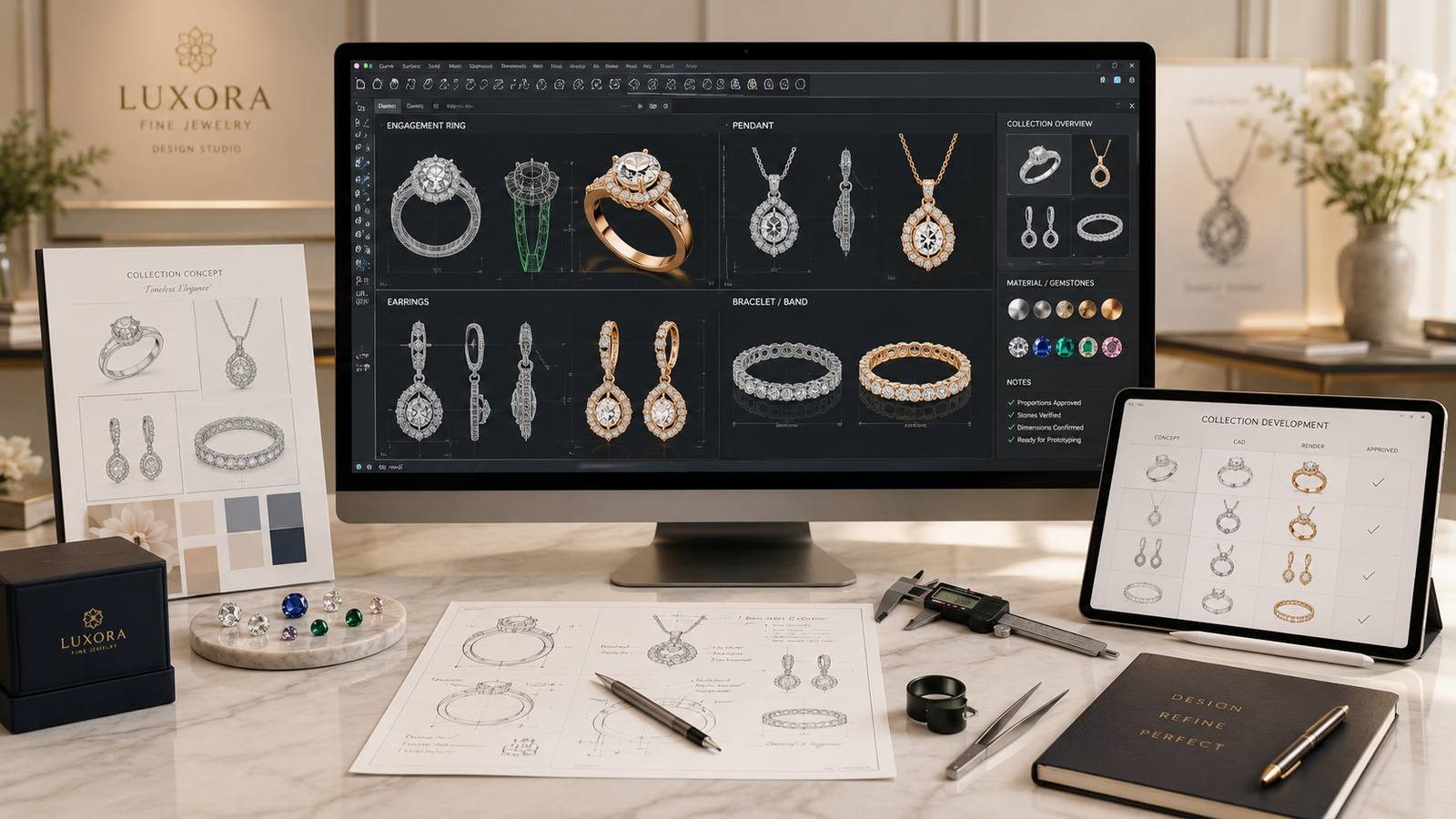
Instead of relying only on sketches, verbal explanations, or physical samples, jewelry brands can use jewelry CAD modeling to create accurate digital models before production begins. A well-built CAD file allows brands to review proportions, stone placement, metal weight, structure, and final appearance with much greater confidence. It also helps manufacturers understand the design clearly and reduces costly mistakes during production.
For fine jewelry businesses, independent jewelers, luxury startups, and custom jewelry designers, CAD is no longer just a technical step. It is a strategic part of building better collections.
Why Jewelry Collection Development Needs More Than a Good Idea
Every successful jewelry collection starts with a strong concept. It may be inspired by a specific style, customer demand, gemstone selection, brand identity, or a new design direction. But an idea alone is not enough to create a manufacturable piece.
A jewelry design must answer practical questions:
Will the piece be comfortable to wear?
Will the stones fit correctly?
Is the metal thickness safe for casting?
Can the design be polished without losing details?
Is the weight suitable for the target price?
Can the design be produced consistently in different sizes?
Will the final product match the brand’s quality expectations?
Professional custom jewelry CAD helps answer these questions early. It turns creative ideas into precise digital models that can be reviewed, adjusted, rendered, and prepared for production.
For a jewelry brand, this means fewer surprises and a more controlled development process.
From Sketch to CAD: Turning Concepts into Real Jewelry Designs
Many jewelry projects begin with sketches, reference images, mood boards, or rough client ideas. These are important because they define the creative direction. However, sketches are usually not enough for manufacturing.
A sketch may show the style of a ring or pendant, but it does not define exact stone sizes, prong structure, wall thickness, ring comfort, or production details. This is why the sketch-to-CAD process is so valuable.
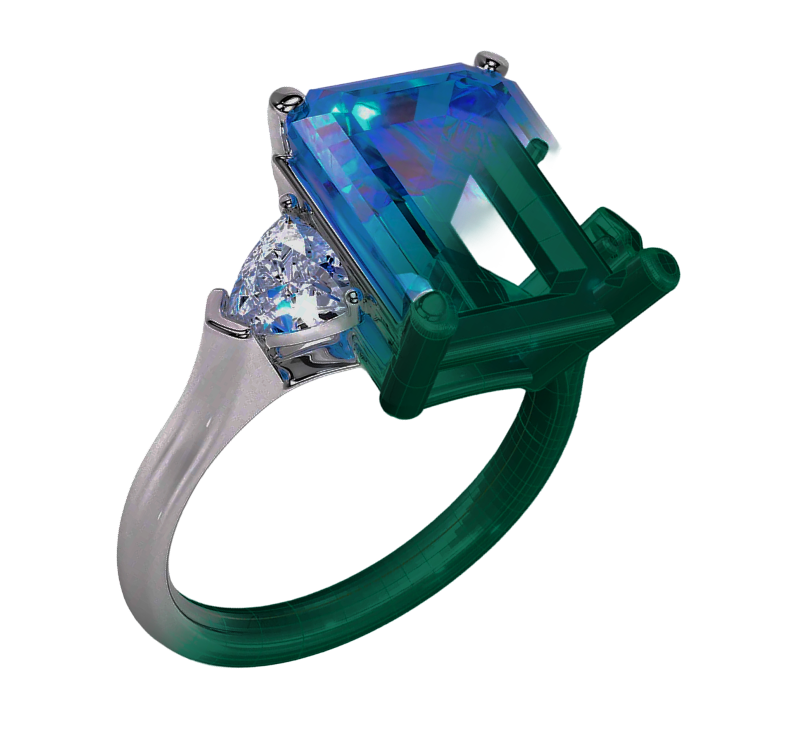
In 3D jewelry CAD design, the concept is translated into a digital model with accurate measurements. The designer can control the height, width, thickness, curvature, gemstone placement, gallery structure, and overall proportions. This gives the brand a realistic view of how the design will work before making a physical sample.
For example, an engagement ring company may begin with a hand-drawn concept for a new halo ring. Through engagement ring CAD design, the idea can be developed into a precise model with the correct center stone size, side stone layout, prong placement, shank thickness, and gallery details.
This process protects the creative idea while making it suitable for real jewelry manufacturing.
https://cadvance.pro/service/jewelry-concept-sketching/
Why CAD Speeds Up the Design Approval Process
One of the biggest advantages of jewelry CAD modeling is speed. Traditional jewelry development can require multiple physical samples, which takes time and increases cost. With CAD, many design decisions can be made digitally before production begins.
A brand can review several variations of the same design, such as:
- Different stone sizes
- Different ring widths
- Different gallery structures
- Different pendant proportions
- Different metal colors
- Different surface finishes
- Different engraving or decorative details
This makes the approval process more efficient. Instead of waiting for a physical sample to understand the design, the client or brand team can review the model and request revisions at the digital stage.
For custom jewelry design, this is especially useful. Clients often need to see the design clearly before they feel confident moving forward. CAD, combined with 3D jewelry rendering, gives them a much better understanding of the final piece.
Better Proportions Before Manufacturing
Jewelry is very sensitive to proportions. A small difference in height, thickness, stone size, or curve can completely change the appearance and comfort of a piece.
In a physical sample, discovering proportion problems can be expensive. The piece may need to be remade, adjusted, or redesigned. But in CAD, proportions can be corrected before production.
For example, a pendant may look perfect in a front sketch, but when modeled in 3D, it may appear too thick, too flat, too heavy, or unbalanced from the side. A ring may look elegant from the top view but feel uncomfortable because the inner profile is not smooth enough. A bracelet may look attractive as a concept but require better link spacing or clasp structure.
Professional jewelry CAD services help identify these issues early. The design can be improved before it reaches 3D printing, casting, or stone setting.
This is one of the main reasons brands use CAD as part of their product development workflow.
Production-Ready CAD Files for Real Manufacturing
A professional jewelry design studio does not create CAD only for visual approval. The final model must also be prepared for production.
Production-ready jewelry CAD includes clean geometry, correct scale, safe thickness, practical stone seats, and proper file formats such as 3DM and STL. These files can then be used for 3D printing for jewelry, casting preparation, and manufacturing communication.
A production-ready CAD model should consider:
- Metal strength
- Casting behavior
- Stone setting requirements
- Polishing allowance
- Ring sizing
- Surface finish
- Weight control
- Printability
- Assembly if the piece has multiple parts
This is especially important for jewelry brands that produce collections, not just one custom piece. When a brand develops multiple designs, consistency becomes very important. CAD helps maintain a clear technical standard across the collection.
https://cadvance.pro/service/photorealistic-jewelry-rendering/
How CAD Helps Control Jewelry Weight and Cost
Metal weight has a direct effect on production cost. A design that looks beautiful but is too heavy may become difficult to sell at the intended price. On the other hand, a design that is too thin may be weak, fragile, or unsuitable for daily wear.
Jewelry CAD modeling allows brands to estimate and control weight before production. The CAD designer can adjust the structure, reduce unnecessary bulk, strengthen weak areas, and balance beauty with practicality.
For example, in pendant CAD modeling, weight control is extremely important. A pendant must have enough metal to feel solid and support stones, but it should not become unnecessarily heavy. In rings, the shank must be strong enough for wear, but still comfortable and elegant.
This balance is part of professional digital jewelry manufacturing. CAD gives brands more control over both design quality and production cost.
3D Jewelry Rendering for Collection Presentation
Once a CAD model is created, 3D jewelry rendering can help present the design in a realistic and attractive way. Photorealistic jewelry renders are useful for approval, marketing, website presentation, catalogs, and social media.
For brands developing a new collection, rendering can show how the designs may look in different metals and stones before production. A ring can be shown in yellow gold, white gold, rose gold, or platinum. Gemstones can be visualized with realistic color and brilliance. Surface finishes can be reviewed before the piece is manufactured.
Jewelry rendering services are especially valuable when a brand wants to test customer interest before producing inventory. Instead of manufacturing every design immediately, the brand can prepare strong visuals and decide which pieces deserve production first.
This makes rendering not only a visual tool, but also a business tool.
https://cadvance.pro/service/photorealistic-jewelry-rendering/
CAD for Custom Jewelry and Private Client Approval
Custom jewelry clients often need reassurance before they approve production. They may have an emotional idea for an engagement ring, anniversary gift, family pendant, or personalized piece, but they may not fully understand technical drawings or workshop language.
3D jewelry CAD design helps make the process clearer. The client can see the shape, stone arrangement, proportions, and overall style before the jewelry is made. If something feels too large, too delicate, too simple, or too complex, revisions can be made digitally.
This creates a smoother client experience and helps the jeweler build trust.
For jewelers and custom jewelry businesses, this is very important. A clear CAD and rendering workflow helps avoid misunderstandings and gives the client confidence in the final result.
CAD Supports Better Communication Between Designers and Manufacturers
Jewelry production often involves several people: the designer, client, CAD specialist, 3D printing service, caster, stone setter, polisher, and brand owner. If the design is not clearly communicated, mistakes can happen.
A professional CAD model becomes a shared reference for everyone involved. It shows the structure, measurements, stone placement, and production intention. This reduces confusion and helps the manufacturing team understand exactly what needs to be made.
For jewelry brands working remotely with manufacturers, this is even more important. Production-ready 3DM/STL files, clear renders, and technical understanding make collaboration easier, even when the brand and manufacturer are in different countries.
This is one of the reasons digital jewelry manufacturing has become so important for modern jewelry businesses.
Why Jewelry Brands Need a Reliable CAD Partner
A reliable CAD partner does more than create models. They understand design language, manufacturing limitations, stone setting, casting, rendering, and client presentation. This combination is valuable for brands that want to develop collections consistently.
A strong jewelry CAD design studio can help with:
- New collection development
- Custom client projects
- Engagement ring CAD design
- Pendant CAD modeling
- Technical file preparation
- CAD to casting support
- Photorealistic jewelry rendering
- Revisions and design refinement
- Production communication
For growing jewelry brands, this creates a more professional workflow. Instead of treating CAD as a last-minute technical task, it becomes part of the brand’s design and production strategy.
Conclusion: CAD Makes Jewelry Development More Professional
3D jewelry CAD design helps brands move from idea to production with greater speed, accuracy, and confidence. It improves design development, supports client approval, reduces manufacturing risks, controls weight, improves communication, and helps create professional presentation materials before production begins.
For jewelry brands, manufacturers, independent jewelers, luxury startups, and custom designers, CAD is not just software. It is a complete digital workflow that connects creativity with real jewelry manufacturing.
At CADVANCE, we provide 3D jewelry CAD design, jewelry CAD modeling, custom jewelry CAD, production-ready 3DM/STL files, CAD to casting preparation, photorealistic jewelry renders, jewelry sketching, idea development, engagement ring CAD design, pendant CAD modeling, and digital jewelry manufacturing support.
If you are developing a custom jewelry design or a full collection, a professional CAD workflow can help you create better jewelry before production begins.
https://cadvance.pro/contacts/
FAQ
How does 3D jewelry CAD design help jewelry brands?
3D jewelry CAD design helps jewelry brands develop accurate digital models before production. It improves design approval, controls proportions, supports manufacturing, and reduces the risk of costly production mistakes.
Is CAD useful for developing a full jewelry collection?
Yes. CAD is very useful for collection development because it allows brands to create multiple designs with consistent proportions, stone layouts, technical standards, and production-ready files.
What is the difference between a sketch and a CAD model?
A sketch shows the creative direction of a jewelry design, while a CAD model defines the exact structure, measurements, stone placement, thickness, and production details needed for manufacturing.
Can CAD help reduce jewelry production costs?
Yes. CAD can help reduce costs by identifying problems before production, controlling metal weight, reducing failed samples, and making communication with manufacturers clearer.
Why are photorealistic jewelry renders important?
Photorealistic jewelry renders help brands and clients review the design before production. They are also useful for websites, catalogs, social media, marketing, and customer approval.
What files are usually needed for jewelry manufacturing?
Common production files include 3DM for editable CAD work and STL for 3D printing and casting preparation. Some manufacturers may request additional formats depending on their workflow.