The Hidden Engineering Behind Luxury Jewelry CAD: Weight, Comfort, and Long-Term Durability
Beautiful jewelry is often judged by its first impression: the brilliance of the stones, the elegance of the silhouette, the polish of the metal, and the emotion of the design. Yet behind every refined piece of fine jewelry there is another layer of quality that is less visible but just as important. It is the engineering behind the design.
In professional 3D jewelry CAD design, a ring, pendant, bracelet, or pair of earrings is not created only to look attractive on screen. It must feel balanced, wear comfortably, hold its stones securely, survive casting and polishing, and maintain its shape after years of use. This is where jewelry CAD modeling becomes more than digital sculpting. It becomes a technical discipline that connects luxury aesthetics with real manufacturing logic.
For jewelers, manufacturers, brand owners, and designers, understanding this hidden engineering is essential. A design that is too thin may look delicate but fail in production. A design that is too heavy may feel premium but become uncomfortable or commercially impractical. A ring that looks perfect from the top view may not sit well on the finger. A pendant may look powerful from the front but hang poorly because the bail, weight, and center of gravity were not considered.
The best digital jewelry work is built on balance. It protects the artistic vision while preparing the piece for real life.
Why Weight Control Is a Core Part of Jewelry CAD Modeling
Metal weight affects almost every part of jewelry production. It influences cost, comfort, casting performance, pricing strategy, and the way the final piece feels in the hand. In luxury jewelry, weight can communicate quality, but excessive weight can create unnecessary cost and poor wearability.
Professional jewelry CAD modeling allows designers and manufacturers to study weight before production begins. The digital model can be adjusted to reduce unnecessary mass while keeping the piece strong and visually refined. This is especially important in custom jewelry CAD projects where the client may request bold shapes, large dimensions, thick lettering, or gemstone-heavy layouts.
For example, a large pendant may require enough depth to feel substantial and support stone setting, but if the back structure is not planned carefully, the piece can become too heavy for daily wear. A signet ring may need a strong top and shoulders, but the inner areas can often be optimized to improve comfort and reduce weight without compromising durability. A wide diamond band must feel solid, but it should not become so dense that it feels uncomfortable between the fingers.
Weight control is not simply about making jewelry lighter. It is about placing metal where it serves a purpose. Strong CAD design respects both beauty and structure.
Comfort Is Designed Before the Piece Is Made
Comfort is one of the most important signs of a well-designed jewelry piece. It is also one of the easiest details to overlook when a design is judged only from a render or front-facing image.
In 3D jewelry CAD design, comfort begins with the internal surfaces, edge transitions, curvature, thickness, and contact points. A ring may have an impressive top view, but if the inside is sharp, flat, or too bulky, it will not feel pleasant on the finger. Earrings may look elegant but become difficult to wear if the weight distribution is poor. A bracelet may appear refined in a still image but feel stiff if the links, hinges, or proportions are not properly planned.
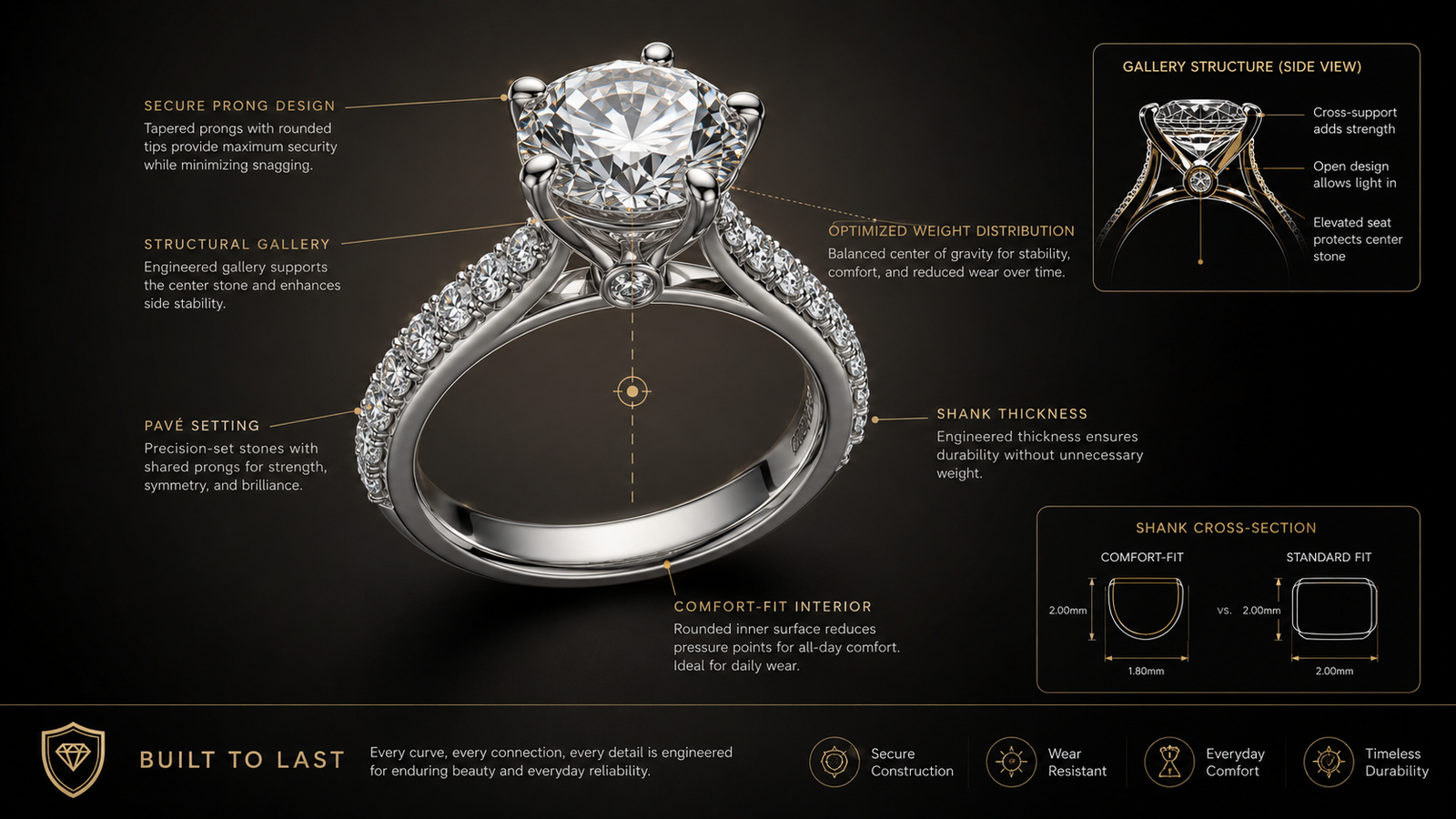
Comfort-fit interiors, softened edges, balanced profiles, and correct finger clearance are all part of professional jewelry manufacturing preparation. These details are not always visible in jewelry rendering, but they strongly affect the final user experience.
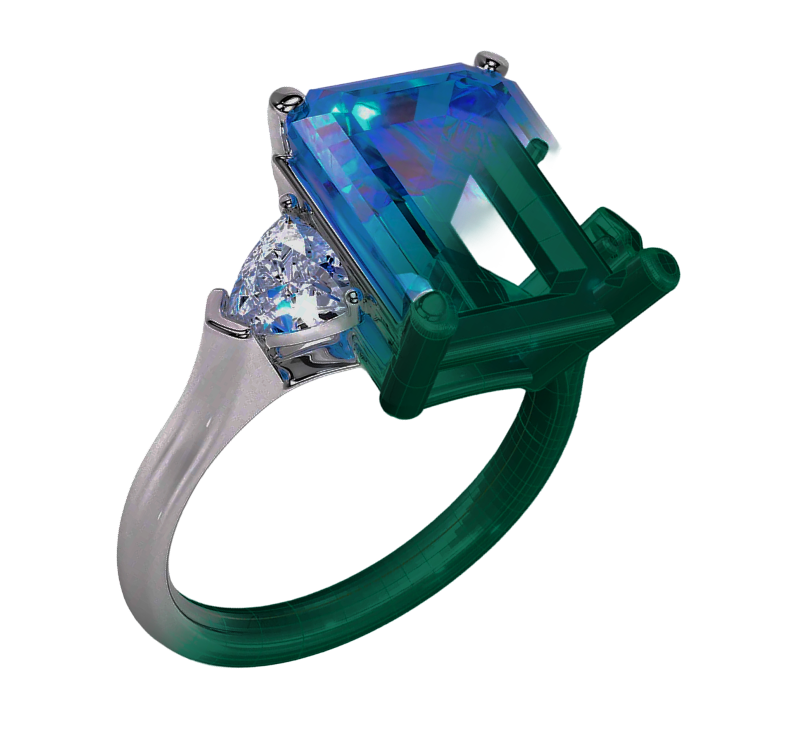
Engagement ring CAD design is a clear example. The center stone, side stones, prongs, and gallery may receive the most visual attention, but the shank profile and inner curve determine how the ring feels during everyday wear. A ring that is too tall may catch on clothing. A gallery that is poorly shaped may press uncomfortably against the finger. A shank that is too thin may feel fragile, while one that is too thick may feel heavy.
Luxury is not only what the customer sees. It is also what the customer feels.
Structural Strength Without Visual Heaviness
One of the greatest challenges in jewelry CAD is creating strength without making the piece look bulky. Fine jewelry often needs to appear delicate, elegant, and refined, but it still must survive real production and long-term use.
This balance is especially important for designs with thin prongs, open galleries, pavé details, filigree-inspired patterns, sculptural elements, and fine decorative connections. If the CAD model is built too lightly, casting and polishing may weaken the details. If it is built too heavily, the design loses elegance.
Professional jewelry CAD modeling requires understanding where strength is needed. Prongs must have enough volume before setting and finishing. Thin bridges must support stones and resist bending. Open spaces must be attractive without making the structure unstable. Decorative patterns must remain readable after casting and polishing.
For jewelry manufacturers, this technical planning reduces production risk. A clean CAD file with correct thickness and thoughtful support allows the workshop to work more efficiently. It helps the caster, setter, and polisher preserve the intended design rather than struggle to repair weak areas.
In custom jewelry CAD, the goal is not to eliminate risk completely, because every physical object has limitations. The goal is to understand the risks early and design with them in mind.
Balance and Center of Gravity in Pendants, Earrings, and Rings
A jewelry piece does not exist as a static object. It moves, hangs, turns, catches light, and interacts with the body. This is why balance and center of gravity matter in digital jewelry manufacturing.
Pendant CAD modeling is one of the clearest examples. A pendant can look symmetrical and attractive in the front view, but if the bail is placed incorrectly or the weight is uneven, the final piece may tilt when worn. The bail must be strong enough for the chain, proportionate to the pendant, and positioned so the piece hangs naturally.
Earrings also require careful weight planning. A large decorative earring may look beautiful in jewelry rendering, but if the weight is too far forward or too low, it may pull on the ear. Stud earrings, drop earrings, hoops, and statement pieces each require different structural thinking.
Rings also depend on balance. A large center stone or elevated top can make a ring feel top-heavy. A wide top with a thin shank may rotate on the finger. A bold men’s ring may feel powerful but uncomfortable if the weight is concentrated in the wrong place.
3D jewelry CAD design allows these issues to be considered before the piece is made. The designer can evaluate proportions from multiple views, refine thickness, adjust internal structure, and improve the way the piece will behave in real use.
The Relationship Between Jewelry Rendering and Engineering Accuracy
Jewelry rendering is often associated with presentation, marketing, and visual approval. Photorealistic images help brands, jewelers, and clients understand how a piece may look in polished gold, platinum, diamonds, sapphires, emeralds, or other gemstones. But rendering is most valuable when it is based on an accurate CAD model.
A beautiful render should not hide poor engineering. It should help reveal the design’s quality.
If a ring render shows perfect stones and elegant proportions, the underlying CAD should still include practical prongs, realistic stone seats, proper wall thickness, and manufacturable surfaces. If a pendant render looks luxurious, the model should still consider weight, bail strength, back structure, and casting feasibility. If a bracelet render looks refined, the links and connections should still be planned for movement, durability, and comfort.
For jewelry brands, this distinction matters. A render can help communicate the emotional value of a piece, but the CAD model determines whether that promise can be manufactured. Strong visual presentation and strong technical modeling should work together, not separately.
The most reliable jewelry design workflow connects concept development, jewelry CAD modeling, production logic, and jewelry rendering into one consistent process.
Long-Term Durability as a Design Standard
Jewelry is not only manufactured; it is worn, cleaned, resized, repaired, polished, passed down, and sometimes redesigned. Long-term durability should therefore be considered from the beginning of the CAD process.
A well-designed ring should have enough material for future polishing. A setting should protect the stones without making future maintenance impossible. A pendant should have strong connection points. A bracelet should have secure joints and a reliable clasp structure. A design with engraving, texture, or sculptural details should be deep enough to survive finishing and wear.
This long-term thinking separates decorative modeling from professional jewelry CAD design. In real manufacturing, a piece must not only impress during approval. It must continue to perform after production.
For engagement rings, durability is especially important because they are often worn every day. The CAD model must respect the lifestyle of the wearer, the stone size, the setting style, the shank strength, and the possibility of future maintenance. For jewelry brands, durable design protects reputation. For manufacturers, it reduces unnecessary repair problems. For clients, it creates trust in the quality of the final piece.
The strongest jewelry is not always the thickest jewelry. It is the jewelry where every technical decision has been made with purpose.
Conclusion: Engineering Is Part of Luxury
Luxury jewelry is often described through beauty, rarity, craftsmanship, and emotion. In modern jewelry manufacturing, precision engineering deserves a place in that definition. A truly refined piece is not only attractive from the outside. It is balanced, comfortable, durable, manufacturable, and intelligently built.
3D jewelry CAD design gives designers and manufacturers the ability to control these qualities before production begins. Through careful jewelry CAD modeling, weight can be optimized, comfort can be improved, stone settings can be supported, and manufacturing risks can be reduced. Through accurate jewelry rendering, the design can be presented clearly without separating beauty from technical truth.
For CADVANCE, high-end digital jewelry work is defined by this connection between artistry and precision. The most valuable CAD models are not simply the ones that look impressive on screen. They are the ones that become better jewelry in the real world.
When weight, comfort, balance, and durability are considered from the first stage of design, jewelry becomes more than a visual object. It becomes a carefully engineered piece of craftsmanship, prepared for production, wear, and long-term value.